LASIK / PRK / ICL service image
LASIK / PRK / ICL

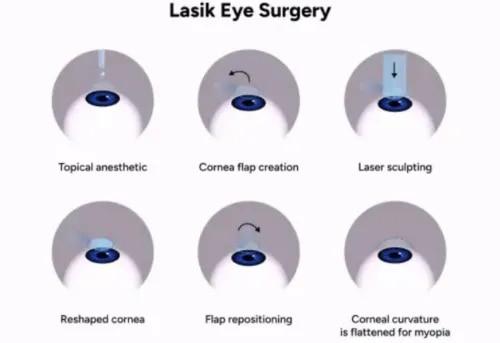
When glasses or contact lenses become a trouble in your life, LASIK surgery offers an alternative that can give you a clear vision again. The innovative technology treats the most common types of refractive errors that you may know as nearsightedness (myopia), farsightedness (hyperopia) and astigmatism. Changes in the structure of your eye that alter your vision may relate to age or to coping with the challenges that result from the way that you use your eyes. LASIK surgery offers a highly successful approach to permanently improving your vision without ever having to use glasses or contact lenses ever again.

CATARACT service image
CATARACT

Cataract is an opacity or cloudiness in the natural lens of the eye. It is still the leading cause of blindness worldwide. When the lens is partially opaque, it is called an immature cataract and some light can pass through to help perform some routine functions. However, when the opacity increases to engulf the entire lens, vision is totally cut off and the cataract is mature. Shubh eye care center provides Cataract Surgery in Jaipur for best cataract treatment in Jaipur , India. Cataract Surgery help to correct the blurred eye vision. CAUSES Aging is the most common cause. With age, proteins of the lens get altered and opacified leading to cataract. Other causes include congenital and developmental anomalies, trauma, inflammation of the eye, metabolic diseases like Diabetes, Hypothyroidism etc. COMMON SYMPTOMS Cataract makes simple tasks difficult and in some cases impossible to perform. This happens on account of: • Cloudy or Blurred Vision. • Changes in one’s perception of colors. • Sensitivity to bright lamps or sunlight. • Poor night vision. • Difficulty in driving especially at night. • Frequent changes in eye glass prescription. TREATMENT The only solution to cure cataract is surgery. Once your lens becomes cloudy or white due to cataracts, no medicine can get it back to being transparent. Lens replacement by surgery is the only feasible means to treat it. But the good news is that cataract surgery is one of the safest surgeries in the world. Cataract surgery improves the vision of 95 % of patients who have it. The basic principle of cataract treatment is the elimination of the cloudy lens by surgery and injection of the artificial lens(IOL).

CORNEA SERVICES service image
CORNEA SERVICES

CORNEA SERVICES Cornea is a clear transplant avascular outermost coat of eye. It plays a key role in eye vision. About 2/3 (two thirds) of eye focussing power is provided by cornea. Any disease that affects its transparency, vascularity or curvature causes problems in vision. TYPES OF CORNEAL DISORDERS CORNEAL ABRASION It means scratch in the cornea due to trauma and is very painful and can lead to eye infection which is further described below. INFECTIOUS KERATITIS (CORNEA ULCER) Infectious keratitis can be bacterial, fungal, viral or parasitic. It leads to severe pain and can cause blindness. CORNEAL OPACITY Any of the conditions mentioned above can cause corneal opacity which can be superficial or deep & can cause decrease of vision. TREATMENT OPTIONS Corneal blindness is one of the most common causes of blindness throughout the world. Early management in cases of progressive keratoconus helps to stop its progression and provides better refractive stability. Many corneal diseases, if diagnosed and treated on time, can prevent permanent blindness in eyes. 1. MEDICAL TREATMENT Concentrated antibiotics eye drops can be given in cases of infectious keratitis ( ulcer) . Culture sensitivity should be done before starting the eye drops. 2. CORNEA TRANSPLANT It is also known as keratoplasty where a damaged or diseased cornea is replaced by donated tissue. Ophthalmologists will recommend the best possible treatment for you depending upon the clinical evaluation.

Keratoconus service image
Keratoconus

Keratoconus is a progressive, non-inflammatory infection which affects the cornea. The cornea is the window of the eye and the key area where images are focused when we see. Keratoconus causes thinning of the cornea which results in bulging, creating a cone-like silhouette of the cornea. WHAT IS KERATOCONUS? The word keratoconus is derived from Greek and Latin. Kerato means cornea and conus means cone shaped. It is a bilateral, progressive, asymmetric, non-inflammatory thinning and ectatic condition of the cornea, occurring in a high degree of asymmetrical myopic astigmatism. WHAT IS THE USUAL AGE OF ONSET OF KERATOCONUS? The beginning of keratoconus is between the ages of 10 and 30. The deviations in the shape of the cornea typically transpire gradually over numerous years. SYMPTOMS Symptoms depend on the severity of the ailment. The most common symptoms include: • Blurry vision • Distortion of vision. • Photophobia • Glare • Eye irritation and itching • Recurrent spectacle power changes. • Incapability to wear contact lenses. TREATMENT CORNEAL COLLAGEN CROSS-LINKING WITH RIBOFLAVIN (C3-R) A new non surgical, non invasive treatment, based on collagen cross linking with Ultraviolet A (UVA, 365nm) and riboflavin (Vitamin B 2), a photosensitizing agent is now available. This changes the intrinsic biomechanical properties of the cornea, increasing its mechanical strength. This increase in corneal strength has shown to arrest the progression of keratoconus. This new treatment has shown great success, a one-time application of riboflavin eye drops to the eye. The riboflavin, when activated by approximately 30 minutes illumination with UV-A light, augments the collagen cross-links within the stroma and so recovers some of the cornea’s mechanical strength.

PTERYGIUM service image
PTERYGIUM

PTERYGIUM WHAT IS PTERYGIUM? A pterygium is a wing-shaped extension of thickened tissue on the surface (conjunctiva) of the white of the eye, which grows onto the adjacent cornea (the window into the eye). Pterygia are benign growths (not cancers), which can continue to grow across the eye and eventually seriously affect sight. It is a fairly common condition. It may occur in one or both eyes. Pterygia generally start in susceptible young adults, and gradually increase in size over the years. In some people, growth may cease after a period, and particularly in the elderly, they may become inactive. WHAT ARE THE SYMPTOMS OF PTERYGIUM? Symptoms include recurrent redness, a feeling of irritation, and watering, although some people may not have any symptoms. If the pterygium grows too far across the cornea, it may affect sight. WHAT ARE THE TREATMENT OPTIONS? Protection from the elements (wind, dust, sea water, sunlight etc) is important; particularly the wearing of a hat and UV filtering sun-glasses, when outdoors. This will reduce symptoms, and prevent progression. It will also reduce the risk of recurrence following removal. In addition, for small pterygia which do not seem to be growing and for which surgery is not necessary, lubricant drops, and occasional decongestant drops that reduce the redness, may be prescribed. If the pterygium appears to be growing, removal is necessary before it gets to the point where it starts to affect vision. If it is left to grow too far across the cornea, residual scarring means that even after excision vision will not return to normal.

DRY EYE service image
DRY EYE

Dry eye is a common condition that occurs when your tears aren't able to provide adequate lubrication for your eyes. What is Dry Eye Disease? Dry eye occurs when you do not produce enough tears or the composition of the tears is abnormal and cannot adequately cover the surface of the eye or are evaporated excessively. The tear film is an essential part for ensuring the overall health of the ocular surface. It cleanses, lubricates and nourishes the surface of the eye as well as protecting it against infection. Both the quality and quantity of the tears must be maintained within certain levels to ensure a healthy and clear refractive surface essential for good vision. Chronic dry eye can lead to damage of the eye’s surface, an increased risk of eye infections, and eventually the inability to produce tears. Left untreated, severe forms of dry eye can even damage your vision. What are the symptoms? Signs and symptoms, which usually affect both eyes, may include: • A stinging, burning or scratchy sensation in your eyes • Stringy mucus in or around your eyes • Sensitivity to light • Eye redness • Foreign body sensation. HOW IS DRY EYE DISEASE TREATED? ADDING TEARS Your ophthalmologist might tell you to use artificial tears. These are eye drops that are like your own tears. You can use preservative free artificial tears as often as you need to. SAVING TEARS Your ophthalmologist may suggest blocking your tear ducts. This makes your natural tears stay in your eyes longer. Tiny silicone or gel plugs (called punctal plugs) may be inserted in your tear ducts. These plugs can be removed later as needed. Your ophthalmologist could also recommend surgery that permanently closes your tear ducts. INCREASING YOUR TEARS Your ophthalmologist might have you use a prescription eye drop medication. This helps your eyes make more of their own tears.

Subcategory Tags

ALLERGYBLEPHARITISCATARACTCATARACT SURGERYCATARACT SURGERY IN JAIPURCONJUNCTIVITISCONTACT LENSCORNEACORNEAL ULCERDRY EYEEYE DROPSGLASSESGlaucomaITCHINGKERATITISKERATOPLASTYLENSESMASS IN EYEMOTIYABINDPHACOEMULSIFICATIONPTERYGIUMPTERYGIUM IN JAIPURPTERYGIUM SURGERYSPECTACLESSUNGLASSESTEARINGWATERINGc3r surgeryglaucoma surgerykala panikeratoconuskeratoconus in jaipurshunt surgerytrabeculectomy

Contact Us

Live Chat

Connect over WhatsApp to resolve your queries realtime.